







It is often said that the devil lies in the details. President Donald Trump has imposed a 25% “reciprocal” tariff, followed by an additional 25% on Indian goods due to India’s continued purchase of Russian oil. The Trump administration believes this is a necessary punitive measure against India, accusing it of indirectly financing Russia’s war machinery.
Before accepting this narrative, let us ask seven key questions to both the American administration and observers of global power politics.


- It is widely reported now that India’s tariffs on US goods stand at around 5% on a weighted average basis, and 17% on a simple average. What statistical formula or method did the US use to arrive at a 25% rate, and how is it considered reciprocal?
- US Treasury Secretary Scott Bessent said that China imported 13% of its oil from Russia before the war, and the figure increased to only 16%, showing “diversification.” India, meanwhile, went from under 1% to over 40%. But how exactly has China diversified? Its main alternatives are discounted crude from Iran and Venezuela, both of which remain under long-standing US sanctions. Has the US quietly opened the door for sanctioned oil trade?
- If China’s energy imports from Iran and Venezuela are framed as acceptable diversification, why did the US sanction six Indian firms in July this year for similar oil trade with Iran? Why one standard for Beijing and another for New Delhi?
- Secretary Bessent accused India’s richest families of profiteering from discounted Russian oil, an apparent reference to Reliance Industries. If the US truly believes that only a few private Indian firms are benefiting, why were those entities not targeted directly with sanctions, like those companies that traded with Iran?
- Secretary of State Marco Rubio recently stated it would be unwise to sanction China for buying Russian oil, since refined oil enters the global market, and higher prices would hurt other buyers. But this same logic applies to India, the second-largest buyer of Russian oil. If global impact justifies exempting China from penalties, why is the same reasoning invalid for India?
- Trade advisor Peter Navarro recently claimed that India is not recognising its role in the Ukraine war and is instead profiteering. India primarily imports crude oil and coal which are subject to the G7 price cap, a mechanism specifically designed to reduce Russian profits. In contrast, the United States and Europe continue importing uncapped items like uranium, fertilisers, and LNG. Why is the US accusing India, a capped-importer, of funding the war, while ignoring its own allies importing far more profitable, unrestricted goods? More astonishingly, Secretary Scott Bessent revealed that US-supplied weapons sent to Europe are being sold to Ukraine at a 10% markup. Does the US not care about profiteering on weapons?
- Peter Navarro also claims that the US bears the cost of India’s oil trade with Russia, as American taxpayers fund military aid to Ukraine while Indian refiners profit. Ironically, much of this “aid” now appears to double as a strategic investment. The recently signed US-Ukraine Mineral Resources Agreement creates a joint fund aimed at developing, processing, and monetising Ukraine’s critical minerals. Aid sent after signing this deal is set to be accounted for toward the US contribution to this fund. The deal includes early access to future mineral exports under market-based terms. So, while the US accuses India of profiteering, it simultaneously positions itself to extract long-term economic returns from Ukraine’s natural resources. The final question then is this: has the United States acted as a reliable ally of Ukraine, or has it positioned itself as a shrewd geopolitical investor, set to gain NATO presence in Russia’s backyard if Ukraine wins, and access to mineral wealth if it does not?
Strategic Sovereignty or Economic Submission?
These seven questions resonate with a dark adage often attributed to Henry Kissinger: “It may be dangerous to be America’s enemy, but being America’s friend can prove fatal.” The inconsistencies lead us to conclude that the United States, under President Trump’s leadership, is neither driven by fairness nor peace. Its only guiding principle is maximising economic benefit, by exerting maximum pressure on every partner.
The United States has signed multiple trade deals with allies like the UK, the EU, Japan, and South Korea. None of which carries any spirit of reciprocity. These deals typically contain three overarching features: The
- United States imposes 10% to 20% tariffs on partner countries, giving them a competitive advantage over nations without deals.
- Partner countries remove most tariff and non-tariff barriers across key sectors like agriculture, dairy, or other industries, as applicable for their country.
- They pledge investments worth hundreds of billions into the US economy.
The most favourable of all the deals touted so far is the U.S.–UK agreement. Ironically, under this deal, the United States will impose a 10% tariff on most British exports, while the United Kingdom has reduced its average tariff on American goods from 5.1% to just 1.8%. If this is the model of “reciprocal” trade, the imbalance speaks for itself. Meanwhile, the EU has agreed to buy $750 billion worth of energy from the US, while Japan will make $550 billion worth of investments in the US to gain a “favourable” tariff rate of 15% from the US. Japan has also agreed to open its markets to imports of trucks, rice and other agricultural goods.
India’s Interests:
Trade talks with India collapsed after five rounds when Prime Minister Narendra Modi refused to open India’s markets in agriculture, dairy, and fisheries. He chose to protect the economic and food security of farmers and low-income communities, even at political cost. In retaliation, President Trump imposed a 25% “reciprocal” tariff, followed by an additional 25% tariff as “punishment” for India’s continued Russian oil imports. The second tariff, however, is unjustified and purely a pressure tactic to achieve two goals.
First, Trump recognises that a 25% tariff is not truly harmful to India. The best Trump could have possibly offered under a deal is a 15% tariff, on par with EU nations. But India, despite a 25% tariff, would still be more competitive than the EU due to lower raw materials and production costs. South Asian countries with production costs comparable to India, such as Cambodia, Thailand, and Pakistan, have signed trade deals with the United States with a tariff regime of 19%. India can easily offset this small gap of 6% through targeted domestic policies, such as reducing taxes or offering support schemes. With these changes, India can retain access to the US market, protect its food security, and avoid forced investment commitments, while incurring only minimal losses. Ironically, therefore, the best deal for India may be no deal at all, and if needed, accept the 25% tariff.
Trump, as a shrewd businessman, understands that this minor tariff gap is not enough to force India’s hand. He needs to raise the pressure. This brings us to his second objective. The US knows India is a big market for energy and defence, and Russia remains our biggest supplier in these two sectors. By adding another 25% tariff, Trump is trying to push India away from Russia and toward American arms and oil.
But this presents India with a difficult choice. A 50% trade barrier could hurt GDP, but abandoning Russian defence and energy partnerships is strategically risky. Russia is a very big supplier of energy, and not having it on the table would create a huge supply deficit, which would lead to a sharp increase in oil prices. Russia has been a consistent defence partner since the Soviet era. Defence ties should be built not only on technology, but on trust and affordability.
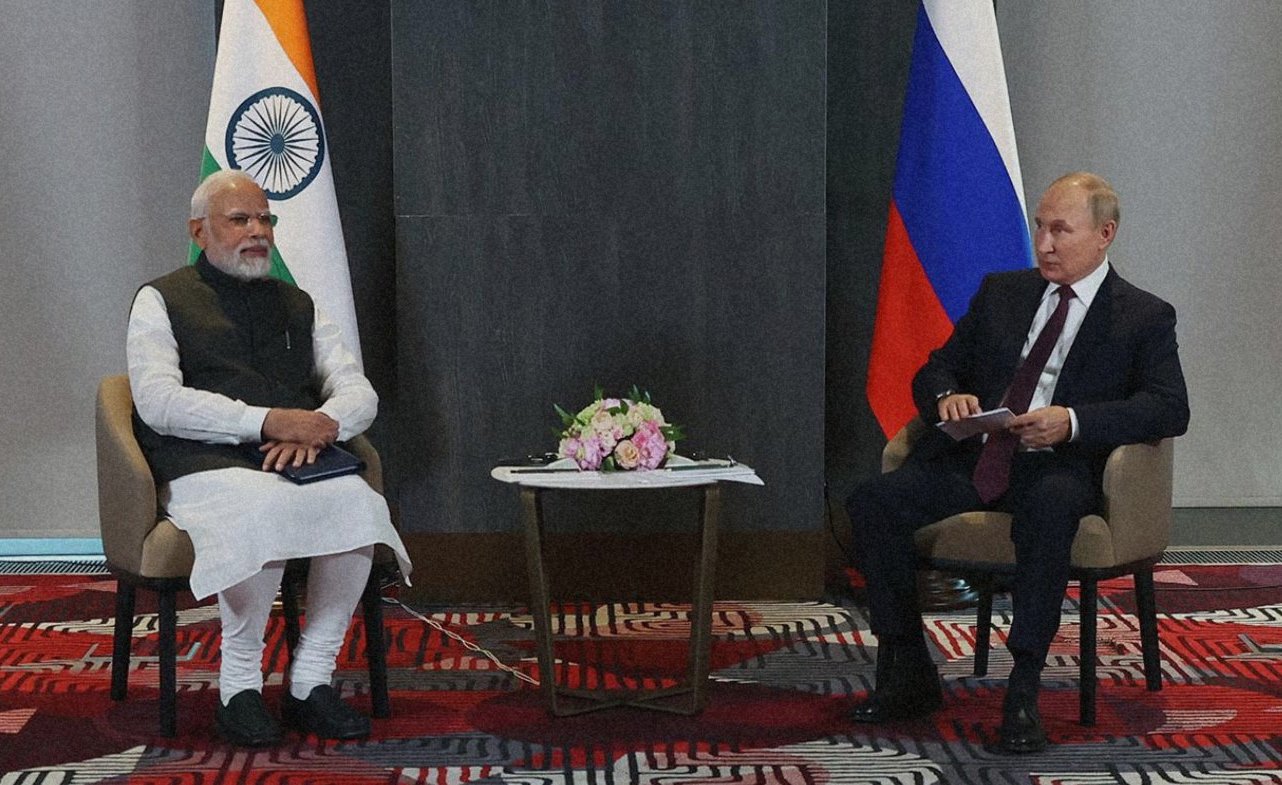
Many experts believe that while US defence platforms like the F-35 are superior to Russian equivalents such as the Su-57, they come at more than twice the cost. The US has also remained averse to technology transfers, joint production, and source code sharing. This forces India to depend on American munitions during wartime, driving up operational costs and risking strategic independence. In contrast, collaboration with Russia has accelerated India’s defence manufacturing through the successful indigenous production of systems like the BrahMos missile, Su-30 aircraft, and AK-203 rifle. With continued technology transfer and the expertise of our scientists and engineers, India is well-positioned to advance rapidly in high-end defence production.
Accepting Trump’s demands on Russian imports might offer short-term trade relief but may lead to long-term strategic vulnerability. Any gains from reduced tariffs could be erased by inflated defence costs and compromised independence.
Conclusion: Indigenous Industries are our Guardrails
This is not just a trade dispute; it is a form of economic warfare aimed at coercing India into submission. At this critical moment, our greatest strength lies in our indigenous industries and entrepreneurs. Just as we stood united behind our doctors during the COVID-19 crisis, we must now stand behind our industrial backbone with equal determination. This is indeed the right time to push for greater domestic manufacturing, particularly in high-tech sectors. We must remember that our national dignity and sovereignty were hard-earned, paid for with the blood and lives of countless freedom fighters. To compromise them now, and that too for fleeting economic advantage, would be nothing short of a disgrace.
Fortunately, our economy has shown remarkable resilience. S&P Global Ratings has upgraded India’s sovereign credit rating to ‘BBB’ from ‘BBB-‘, for the first time since 2007. Indian stock markets remained relatively stable despite President Trump’s tariff announcements in early August. However, we must stay vigilant. Attempts at sabotage, whether economic or otherwise, cannot be ruled out. There may be attempts by external actors to orchestrate disruptions in our key industrial sectors, and we must be fully prepared to counter them.
Closing with a speculative but serious concern. On August 6, the US announced a 50% tariff on Indian goods. A week later, on August 13, Pakistani Army Chief Asim Munir reportedly stated at a formal dinner in Florida that a Reliance refinery in Jamnagar could be a future target in a military conflict. It is that Washington did not issue any clarification to such a provocative statement made on US soil. Then, on August 20, US Treasury Secretary Scott Bessent alleged that some of India’s wealthiest families made over $16 billion in excess profits from Russian oil, again likely pointing to Reliance Industries.
Is this sequence of events purely coincidental, or have attempts at coercion or sabotage already begun? Are external actors attempting to intimidate, vilify, or weaken our industrial leadership? Only time will provide the answer. For now, it is essential that we remain alert to any foreign interference that may undermine our national security, economic interests, or social cohesion.
(The author is not an expert in foreign policy, defence, or economics. However, recent events have brought these complex matters into the living rooms of almost every Indian. This article is inspired by one such discussion the author was part of, and found worth sharing.)